
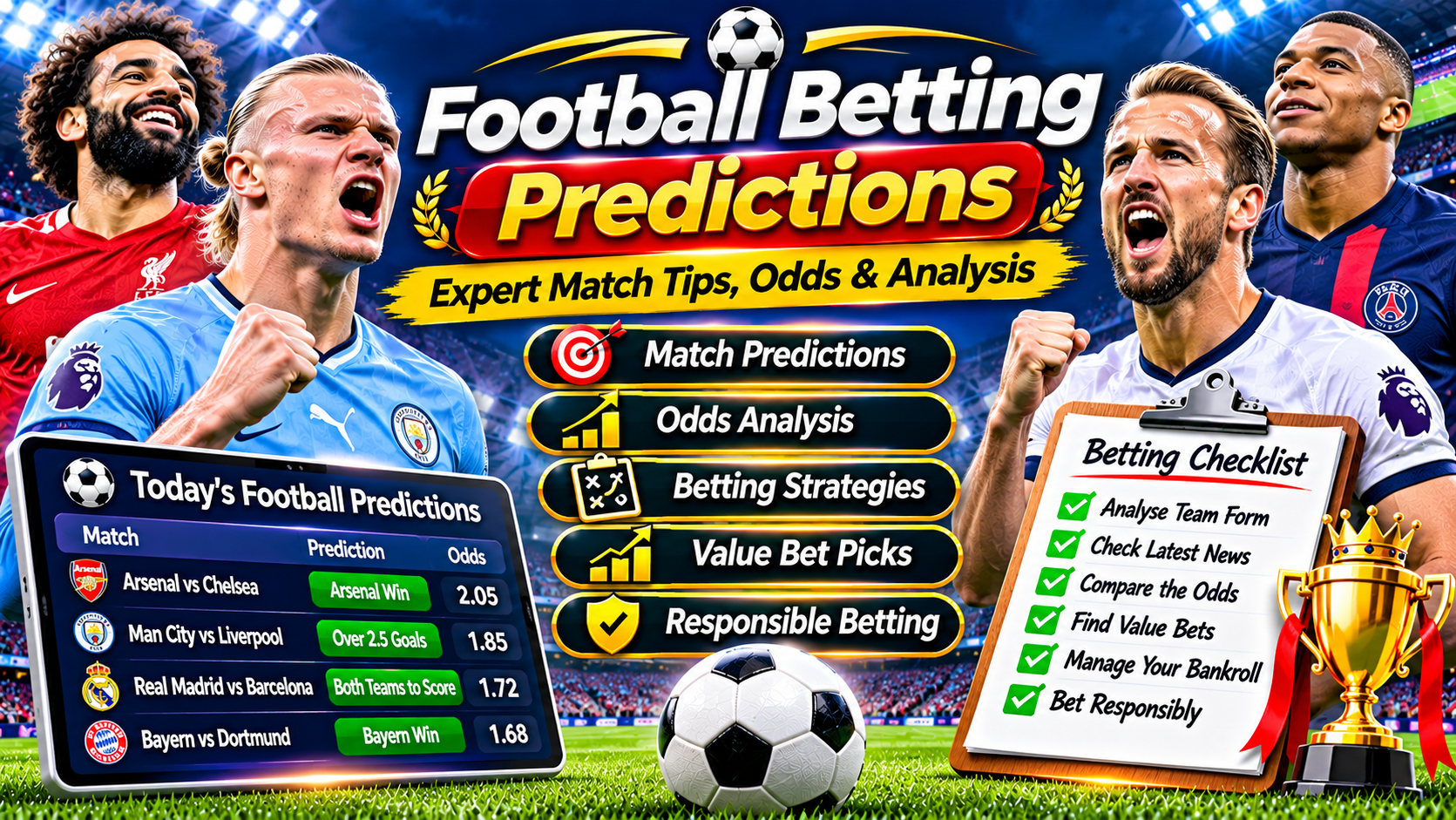
Why Local Context Improves Your Pre-Match Edge
Most bettors start with league form and headline stats, but local match context often explains what the numbers miss. Home crowds can influence tempo, decision-making, and even referee tolerance, especially in heated rivalry matchups. Travel fatigue also matters, Football Betting Predictions particularly for teams that arrive less rested or rotate heavily due to congestion in their schedule. When you build your view around these factors, your bets become less “guessy” and more structured.
Local relevance also means paying attention to how a team performs in front of its own supporters versus away. For example, a club that presses aggressively at home may struggle to sustain that style when the stadium atmosphere is quiet or when the opponent plays deep. You can track patterns like early goal probability, set-piece efficiency, and how often the team concedes big chances in the first half. These signals help you narrow down the most realistic betting markets rather than scattering stakes across outcomes.
Match Analysis Checklist for Smarter Picks
A solid analysis starts with market behavior, not just team news. Check whether odds are tightening on one side and whether that movement aligns with injuries, suspensions, or tactical changes. If a key attacker is doubtful, you should see the market react through reduced goal expectation rather than dramatic shifts in pure win odds. Even small absences can change how a team builds attacks, which affects total goals, both-teams-to-score, and handicap value.
Next, review style matchups: pressing intensity versus opponent buildup, wide play versus compact defending, and how each side defends transition situations. If one team allows quick counters and the other struggles to recover defensively, then markets tied to pace—like under/over based on expected chances—can become more informative. You should also consider discipline trends, because red cards and late fouls swing results more than casual fans realize. Finally, map your risk: if uncertainty is high, lean toward safer ranges like totals, double-chance, or “safer scorer” angles instead of exact match outcomes.
For local relevance, add travel and stadium dynamics to your checklist. A home team might be comfortable with its pitch speed, crowd noise, and set-piece routines that are rarely replicated elsewhere. Conversely, visiting sides often face adjustment problems when conditions differ, especially with weather and turf characteristics.
Bet Types That Fit Home-and-Rivalry Scenarios
Rivalry matches and local derbies frequently produce different betting value than straightforward league games. These contests can compress risk—teams may avoid early mistakes, leading to fewer open-field chances and slower starts. That doesn’t always mean “low scoring,” but it often shifts value toward first-half markets, correct score ranges, or totals that reflect chance quality rather than name recognition. If both teams prioritize control, then “under” selections and cautious handicaps can outperform.
For bettors who prefer direct outcomes, the key is to avoid blind faith in the home label. Instead, assess whether the home side’s strengths match what the opponent is likely to allow. If the visiting team defends well against through balls but concedes wide crosses, then wide-attacker props and totals related to chance volume can be more logical. If the home team dominates possession but produces fewer clear chances, then betting “both teams to score” may be less attractive than focusing on “team to score first” or “home team to win and over a modest total.”
Casino and slot choices can also complement responsible betting routines, but keep them separate from match stake sizing. Many players get tempted to chase losses through instant games, which disrupts bankroll discipline. A better approach is to set a fixed play amount for casino entertainment and let sports betting decisions follow your pre-match plan. If you manage both areas independently, you’ll reduce emotional pressure and make more rational selections.
How to Evaluate Odds, Build a Bankroll, and Avoid Traps
Odds evaluation should start with implied probability and then move into what you believe is “extra” value. If the market prices a match like a coin flip, but you see a clear tactical mismatch or a crucial lineup gap, then the safer side may still offer upside. Conversely, if odds are already reflecting the biggest advantage, you may need to pass or reduce exposure. Look for edges where your analysis explains why the market is underestimating a factor, such as set-piece mismatch, transition vulnerability, or home-specific intensity.
Bankroll management is the difference between short-term wins and long-term staying power. Use smaller stakes when uncertainty is high, and scale up only when your confidence is supported by multiple aligned indicators. A simple rule is to avoid raising stakes after a losing streak, because that often leads to chasing rather than researching. Track your results in a way that separates bad luck from flawed process, so you can improve without overreacting to variance.
To keep your approach responsible, set limits before you place any bets and decide what you’ll do if you hit them. Stop while ahead if you reach your win target, and stop playing if you reach your loss limit. If you use online casinos, treat them as entertainment with a separate budget, not a recovery tool. That discipline supports better decision-making and helps you keep sports betting enjoyable rather than stressful.
Conclusion
Local context can turn generic match previews into sharper decisions, especially when home crowds, travel conditions, and rivalry intensity affect how games actually unfold. By using a checklist that includes market movement, tactical matchups, and discipline trends, you can make selections that reflect more than just standings. Pair that with thoughtful bankroll rules and you’ll protect your long-term approach. When you combine structured analysis with responsible betting habits, you can enjoy the process while staying realistic about risk. Use value-focused markets that fit the fixture character, and avoid forcing outcomes when uncertainty is too large. With consistent preparation and disciplined stake sizing, your next local matchup can become a well-reasoned bet rather than a gamble based on hope.
1 comment
Great post—one of the biggest problems bettors face is treating “gut feel” as a system, which leads to inconsistent Football Betting Predictions and avoidable losses. A solid solution is to focus on a repeatable process: check team form and matchup style, confirm injuries and lineup changes, compare market odds across