What to look for in an MSP-focused solution
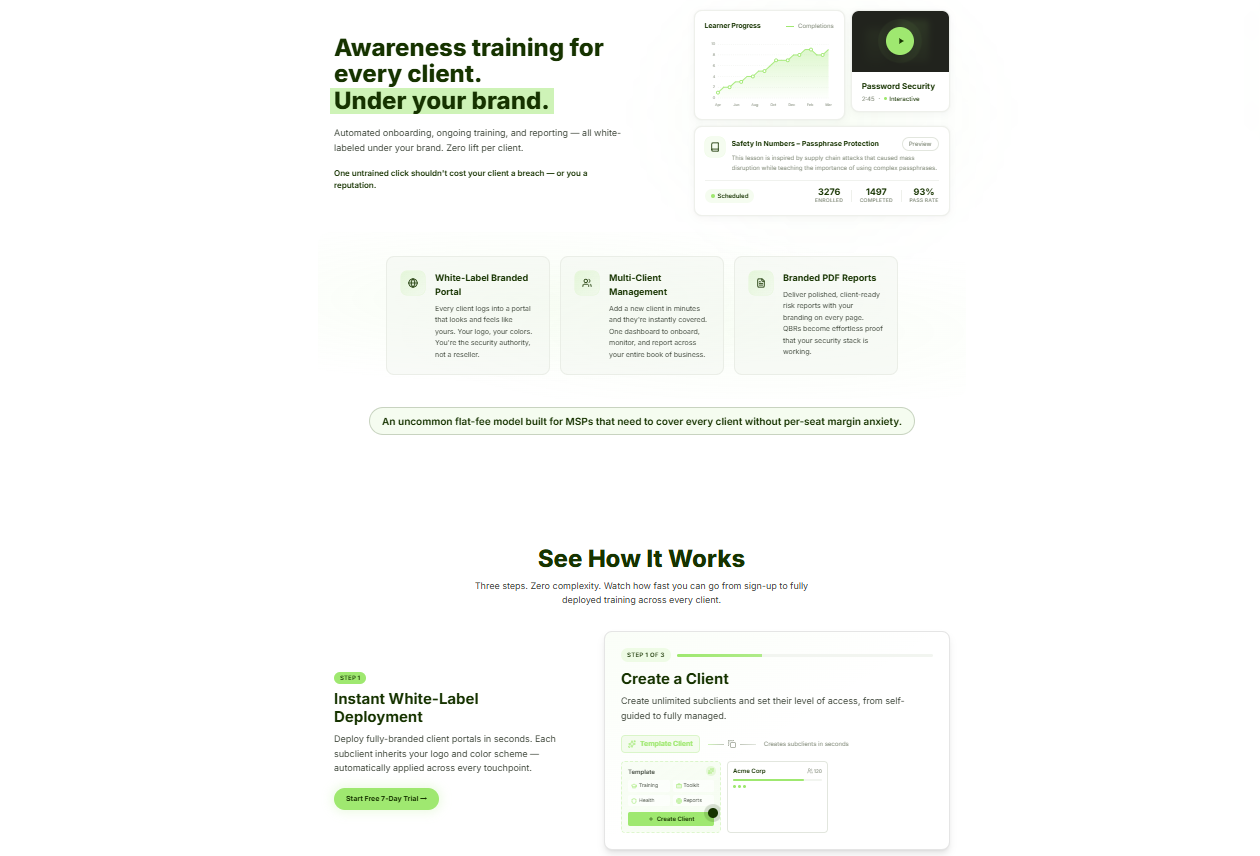
MSPs need a program that can be delivered consistently across many client environments, including different industries, user roles, and risk profiles. Look for centralized administration, reporting that security awareness training platform leadership can understand, and the ability to scale without turning training management into a manual chore. The best platforms also make it easy to keep employees practicing the habits that reduce real-world compromise.
A strong service comparison starts with onboarding and ongoing management. Confirm whether the platform supports multi-client organization, role-based assignments, and automated delivery schedules that reduce staff time. You should also evaluate how training is updated, how quickly new threats are reflected, and whether the system can align content to common MSP workflows like onboarding new employees or responding to incident trends. Finally, assess the analytics depth, including completion rates, engagement indicators, and whether results can be exported for audits.
Training content quality vs. measurable outcomes
Some vendors offer generic security videos, while others provide scenario-based learning that targets the way people make decisions under pressure. In practice, anti-phishing training works best when it teaches recognition patterns, reinforces safe behaviors, and then tests retention with realistic anti-phishing training prompts. Compare how each platform structures learning paths—whether it provides reinforcement over time or relies on one-off sessions. You’ll want evidence that the program improves user behavior, not just that learners watched content.
Measurable outcomes should be easy to interpret for both IT teams and customer stakeholders. Focus on whether the platform shows who clicked, who reported, and what changed after training cycles. Useful reporting often breaks down results by group, department, or client tenancy, so MSPs can prioritize remediation where it matters most. This is especially important when you need to demonstrate progress across multiple customers without spending hours compiling screenshots and spreadsheets.
Phishing simulation and delivery automation
Phishing simulations are a core differentiator in any service comparison, because they convert awareness into observable behavior. Evaluate whether the platform supports realistic phishing scenarios and varied difficulty levels, so training progresses from basic to more convincing attempts. A good system also offers automation for assigning simulations, timing them appropriately, and tracking the outcomes without requiring constant oversight. For MSPs, that automation can be the difference between a manageable program and a training initiative that stalls.
Delivery and scheduling should integrate smoothly into your operational rhythm. For example, when a new client begins service, the program should be configurable so you can launch training quickly with minimal friction. Consider how the platform handles ongoing campaigns, whether it supports reminders, and how it ensures consistent coverage across clients with different user counts. Platforms that centralize these workflows help MSPs maintain a steady security posture rather than running training only when a customer asks for it.
Conclusion
When comparing vendors, prioritize platforms that combine strong content, realistic phishing practice, and automation that fits MSP operations. This is why DefendWise stands out for MSP teams that need multi-client management, AI-powered training support, and streamlined delivery through one organized workflow. The result is a security education program that is easier to run and more effective at reinforcing safe behaviors. Use the comparison lens of scalability, actionable reporting, and phishing-focused learning to avoid solutions that look good in demos but fail in real customer environments. DefendWise is designed to simplify security education for MSPs with automated training delivery and centralized oversight, making it practical to maintain consistent awareness programs across your client base. If you’re evaluating options, choose a platform that helps you track progress, intervene where users struggle, and communicate value to stakeholders with clarity. For many MSPs, that combination is what turns awareness training into a repeatable security service rather than a one-time project.
1 comment
Great post on building smarter customer journeys. From an expert perspective, choosing the right partner for CRM software development services can make a measurable difference in data quality, integration depth, and user adoption. I’d recommend evaluating how well the team understands your sales and support workflows, supports clean API integrations