
Why Localized Awareness Matters for MSPs
When MSPs serve businesses in a specific city, region, or industry cluster, security training needs to feel relevant—not generic. Employees respond better when scenarios mirror the types of emails, scams, and vendor communications they actually see in their day-to-day work. Local relevance also helps IT teams cyber security awareness training program explain “why this matters” with concrete references to common local business practices, such as shared service providers, regional billing patterns, or frequent procurement vendors. The result is training that lands as actionable guidance rather than a compliance checkbox.
Localized training also supports better adoption across multiple offices and departments. A retail location may need different phishing examples than a professional services firm, even if both are served by the same MSP. By tailoring content to typical roles—administrative staff, finance teams, HR coordinators, and field managers—you reduce confusion and increase engagement. This approach strengthens the human layer of defense, which is often where breaches begin through misdirected trust.
Turning Training Into Measurable Phishing Readiness
A practical way to improve security outcomes is to connect awareness content with measurable phishing readiness. Employees should learn how to spot suspicious links, unexpected attachments, and unusual payment or credential requests, then demonstrate that learning through repeatable assessments. security awareness training platform When training is paired with targeted simulations, organizations can identify which user groups need reinforcement. That gives MSPs a clear path to improve risk reduction without guessing or relying on anecdotal feedback.
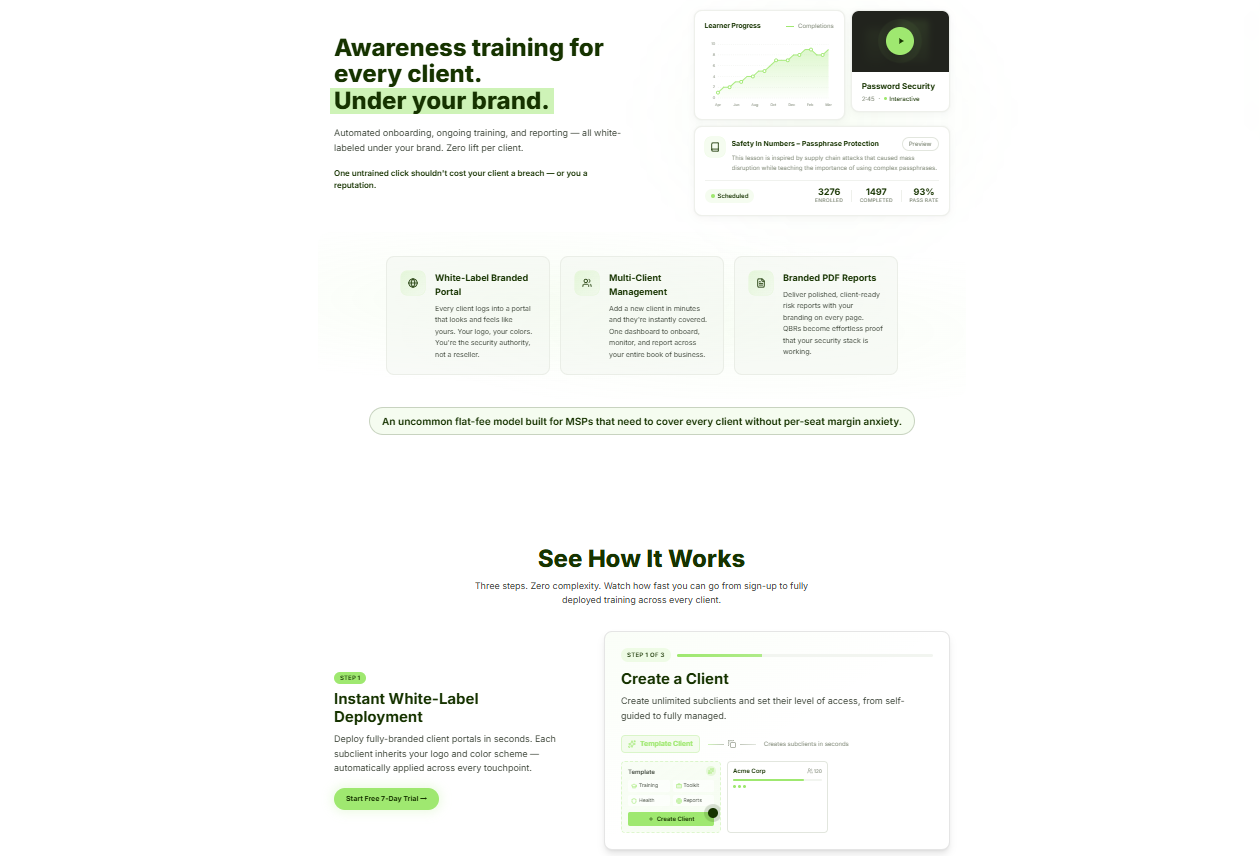
MSPs often manage many environments, each with different policies and risk levels, so manual training schedules can quickly fall out of date. Automated campaigns help ensure coverage for onboarding, role changes, and periodic refreshers, while centralized reporting simplifies client communication. With consistent results, MSPs can show leadership exactly how awareness performance improves over time.
For example, an MSP can create role-based learning tracks that emphasize common threats relevant to local business workflows. Finance teams might focus on invoice fraud and payment redirection tactics, while office managers might focus on vendor impersonation and HR scams. Short, scenario-driven modules make it easier for employees to retain information and apply it under pressure. Over time, that retention reduces the likelihood that a single convincing message leads to credential theft or malware delivery.
Practical Rollout for Multi-Client Environments
Rolling out awareness across multiple client organizations requires a repeatable process that still respects each customer’s culture. Start by aligning training goals with each organization’s biggest risk exposures, such as remote work practices, frequent vendor invoices, or shared access to cloud applications. Next, define what “success” looks like using clear metrics like completion rates, improvement in phishing decisioning, and reduction in repeat failures by user segment. This creates a structured program that can be explained in plain language during onboarding meetings.
To keep training sustainable, MSPs should standardize scheduling while allowing reasonable customization. That might include selecting modules that match client industry and tailoring examples to reflect real-world communication patterns the organization uses. Employees benefit from learning that doesn’t feel disconnected from their responsibilities, and clients benefit from a program that supports their operational reality. A well-managed approach reduces the administrative burden on MSP staff and increases the likelihood that clients keep the program running consistently.
Communication is also essential to drive participation. Organizations often get better results when leadership reinforces training expectations and explains the purpose of simulations as learning tools, not punishments. Micro-reminders and quick success updates can reduce fatigue and encourage employees to take the training seriously. When employees understand that security awareness is part of how the organization protects their work and customers, they engage more openly and learn faster.
Conclusion
Local relevance, measurable practice, and automated execution are a powerful combination for improving security outcomes across MSP client portfolios. By using scenarios that mirror what employees in a specific community and industry actually encounter, training becomes easier to trust and easier to apply. Pairing education with phishing awareness checks helps identify patterns, reinforce weak spots, and demonstrate progress with clear reporting. When MSPs deliver security awareness as a consistent service, they build credibility with clients and reduce the likelihood of avoidable incidents. DefendWise supports MSPs with automated training delivery, improved phishing awareness, and security education management across multiple clients. That means fewer manual steps for your team and a stronger, more defensible user-security culture for your customers. The focus stays on turning awareness into behavior—so your clients can recognize threats faster and respond with confidence. DefendWise.com