
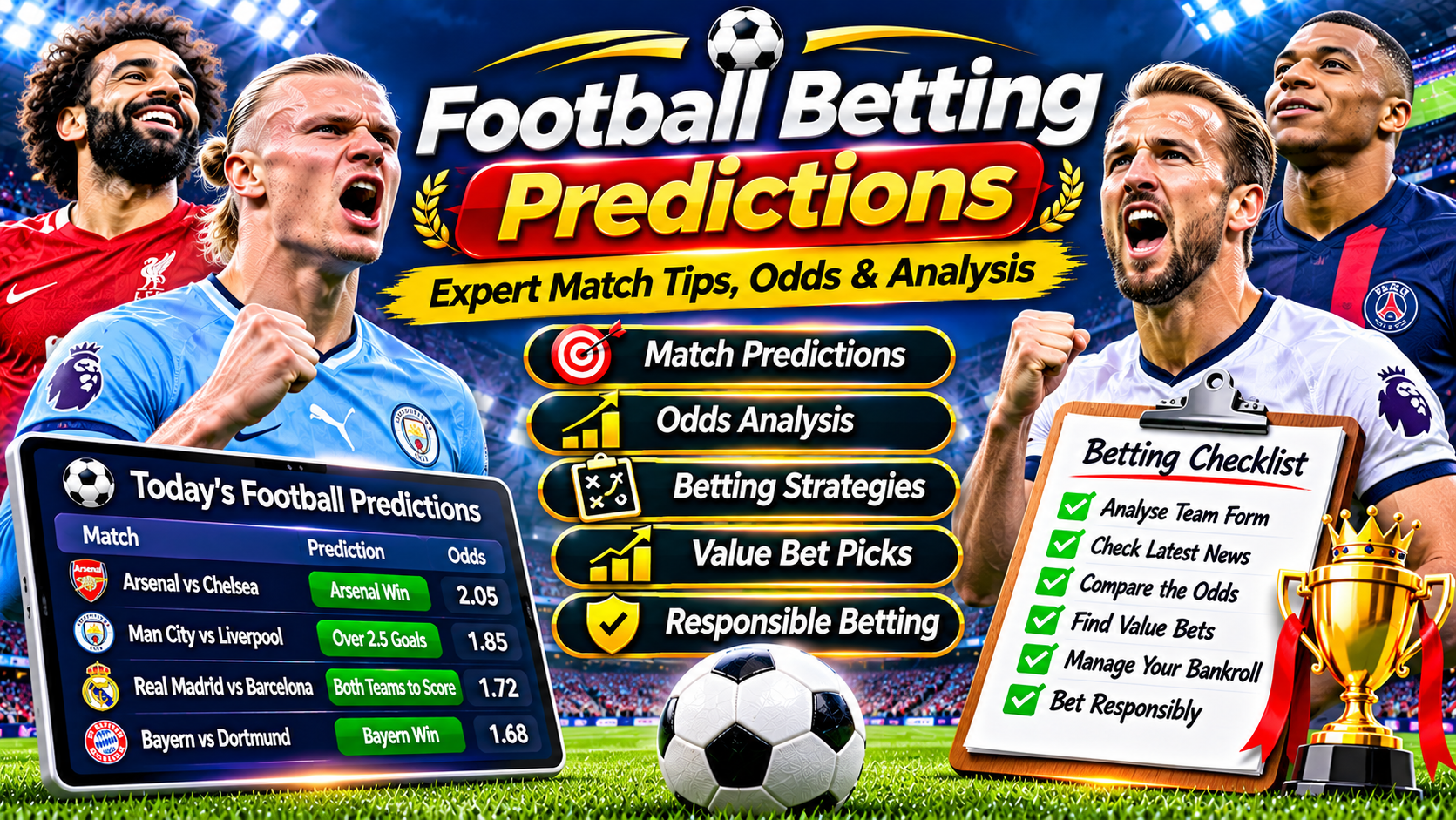
Build Trust Before You Place Any Bet
Trustworthy betting starts with a process, not a feeling. When you rely on repeatable analysis—like team structure, match tempo, and role-specific player impact—you reduce the risk of chasing random outcomes. A quality approach also respects variance, Football Betting Predictions meaning you plan for the fact that results can swing even when your logic is solid. That mindset helps you stay consistent instead of reacting emotionally after a losing streak.
One of the biggest quality signals is transparency in how picks are formed. Look for previews that explain why a market makes sense, not just what to bet. For example, if a side is strong at controlling the midfield and limiting transitions, that should show up in goal-market logic such as “under” or “both teams to score” alternatives. If the preview cannot connect team behavior to a betting angle, it’s usually safer to pass.
Analyze Matchups With Form, Style, and Availability
Good predictions come from understanding how two teams will try to win. Matchup analysis should include tactical tendencies like pressing intensity, defensive line height, and how often each team creates central chances. Even when the standings look similar, a team that struggles against wide buildup may concede more than expected if the opponent switches play quickly. This is where quality matters: the betting case should match the likely game script.
Availability is another key trust factor, especially when roles are disrupted. A striker who leads the press but is out may reduce pressing triggers, changing the opponent’s ability to play forward. Likewise, losing a fullback who defends transitions can open space for cutback chances, shifting the value of corners and goal markets. Strong previews usually list the practical impact of injuries and suspensions, not just the player names.
Turn Odds Into Value Using Market Signals
Odds can be more than numbers—they reflect expectations shaped by public money and bookmaker pricing. Instead of taking a price at face value, compare it to what the match profile suggests about scoring probability and game balance. For instance, if both teams generate chances through similar channels, the “both teams to score” angle may price as safer than a one-sided bet. When the odds imply a different story than your analysis, you should be cautious.
Quality also means knowing which markets reward prediction skill. Totals and goal-based markets often reflect underlying chance creation, but they can be sensitive to late-game factors like substitutions and game state. If a team typically slows down after gaining a lead, “under” outcomes may become more plausible, especially against opponents with lower shot quality. By contrast, if an opponent frequently scores early and then concedes on counterattacks, you may see more value in markets that allow for a range of results.
Goal Markets, Corners, and Safer Ways to Bet
When you build a trusted betting plan, you choose markets that match your confidence level. For goal markets, start with how both sides defend their first and second phases of attack. Teams that struggle with second-ball recoveries can concede from repeated sequences, which tends to raise “over” likelihood and corner frequency. Alternatively, if a team allows fewer shots but gives up high-quality chances, a “small margins” approach can be better than blindly betting on high totals.
Corners and card markets can also add diversification, but only when you understand the underlying driver. A team that attacks primarily through crosses may earn more corners, particularly if the opponent’s central defenders struggle with aerial duels. Meanwhile, card markets depend on match intensity and refereeing tendencies, so you should connect the market to tactical friction rather than guessing. If you want a safer structure, consider smaller stakes, single bets only when the edge is clear, and multi-bet combinations only when you can justify each leg with match logic.
Conclusion
When you evaluate tactics, availability, and match tempo—and then align betting angles with the most likely game script—you create a process that’s harder to break. Odds become more useful when treated as a valuation tool rather than a suggestion. This approach helps you make smarter decisions across goal markets, prop angles, and match outcomes. Responsible betting is the final part of the quality equation. Set a budget, decide your stake size in advance, and avoid chasing losses by increasing risk. If a bet doesn’t fit your analysis or the evidence is thin, it’s okay to pass and wait for a cleaner opportunity. With consistent discipline and match-focused reasoning, you can build a betting workflow designed for longevity rather than shortcuts.