
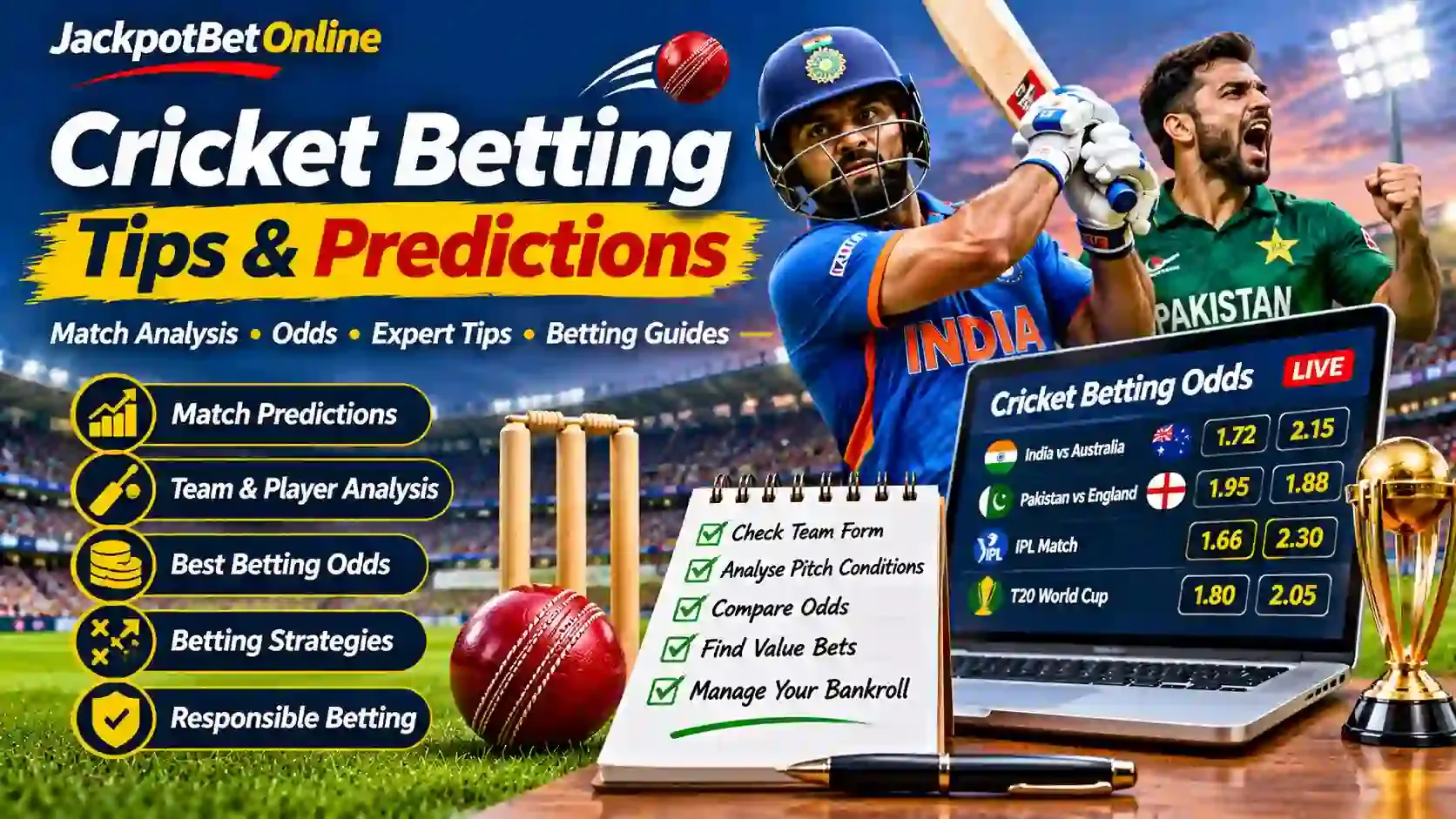
Build Trust Before You Bet
A trustworthy betting guide explains what it considers, why it matters, and how to approach uncertainty. When you can follow the logic behind a Cricket betting tips prediction—rather than just receiving a bold claim—you’re more likely to make disciplined decisions. That kind of transparency is what helps readers avoid reactive betting and focus on value.
Quality analysis also means covering both sides of a matchup, not just chasing one “safe” angle. For example, if you’re looking at a likely run rate, you should see notes about batting depth, bowling matchups, and fielding pressure—not only a single statistic. Reputable content will also encourage you to check the latest squad updates and understand how lineup changes can shift probabilities. If a site avoids discussing risk, markets, or bankroll limits, it’s a red flag.
Use Match Context, Not Just Numbers
In cricket, small variables can swing outcomes quickly: a late injury to a key bowler, a captain rotating the batting order, or a pitch that behaves differently after rain. Reliable guides typically examine recent form, head-to-head trends, and player roles within the team. They also connect those factors to the format—whether it’s a Test match, ODI, or T20—because each format rewards different skills and game plans.
Pitch and weather are especially important for markets like totals, innings runs, and over/under lines. A dry surface can support pace and late movement, while a slower wicket may reward spin and change shot selection. Similarly, wind and dew can affect ball grip, swing, and boundary clearing. When guides explain how conditions influence power-hitting versus timing, you gain a clearer view of what the numbers are trying to predict.
Learn the Markets That Shape Your Risk
Match winner bets focus on overall team strength and game-state management, while top batsman and top bowler markets depend more on individual opportunities. Total runs and innings totals can be influenced by batting depth, bowling efficiency, and how often teams lose wickets at key overs. If a guide explains these relationships, you can choose markets that fit your understanding level instead of guessing blindly.
It’s also crucial to understand how markets interact. For instance, if you expect an early collapse, that can affect both top-order player props and the total runs range. If the match is likely to be low-scoring, opening partnership markets may look different than middle-overs totals. Live betting adds another layer: odds shift with wicket timing, powerplay control, and sudden changes in strike rotation. A trustworthy guide should teach you how to interpret those movements rather than encouraging chasing.
Respect Odds, Value, and Bankroll Discipline
One of the highest-quality approaches is evaluating odds as an input, not a guarantee. Good analysis compares what the market currently prices against what you expect from team structure, conditions, and matchups. If the implied probability looks misaligned with the actual risk factors, the bet may represent value. If it doesn’t, then the “best” bet may simply be the one you skip.
Bankroll management is where responsible wagering becomes practical. Even well-researched picks can lose due to variance, especially in T20 where a few overs can rewrite the script. A quality betting guide typically suggests sizing stakes conservatively and setting boundaries for wins and losses. It may also discuss bookmaker comparisons and how different pricing can affect your long-term results. When you treat betting as a process—not a quick route to profit—you protect both your bankroll and your decision-making quality.
Conclusion
When a guide explains its reasoning around form, matchups, pitch behavior, and player roles, you can assess uncertainty with more confidence. You also gain an advantage by understanding which markets align with the factors you can actually analyze. That approach helps you bet with intention rather than emotion. At the same time, no strategy can guarantee winning outcomes, because cricket includes real randomness and match-day surprises. The best results often come from disciplined evaluation, responsible stake sizing, and continuous learning about how conditions shape gameplay. If you use informative match previews, market explanations, and odds-focused thinking, you’ll make smarter decisions across international and domestic competitions. For anyone aiming to improve their betting process, that balance of analysis and responsibility is the foundation.